OECS Logo
Powered by AI
HomeCurriculumCommunitiesResourcesHelp
  1. Home
  2. 📚Curriculum
  3. 🎨Kindergarten
  4. Games
  5. Week-5

OECS Curriculum

The Organisation of Eastern Caribbean States (OECS) Curriculum Framework is designed to provide a comprehensive, student-centered approach to education across member states.

Quick Links

  • Curriculum Overview
  • Teacher Resources
  • Lesson Planner
  • About OECS
  • Privacy Policy
  • Terms of Service

Contact

OECS Commission

Morne Fortune

P.O. Box 179

Castries, Saint Lucia

Email: pearl@oecs.int

Tel: +1 758-455-6327

Subscribe to Newsletter

Stay updated with the latest curriculum resources and teaching strategies.

© 2026 Organisation of Eastern Caribbean States. All rights reserved.

    Week 5: How can I get better at playing games?

    Weekly Focus

    Children explore ways to improve their game-playing skills through practice, following rules, and developing good sportsmanship. They learn about perseverance, teamwork, and the importance of having fun while playing games.
    Week Plan PDF All Materials Plan Your Lesson Previous WeekGames Unit Complete

    Week at a Glance

    • Understand the importance of practice
    • Develop perseverance and growth mindset
    • Demonstrate good sportsmanship
    • Reflect on personal growth in game skills
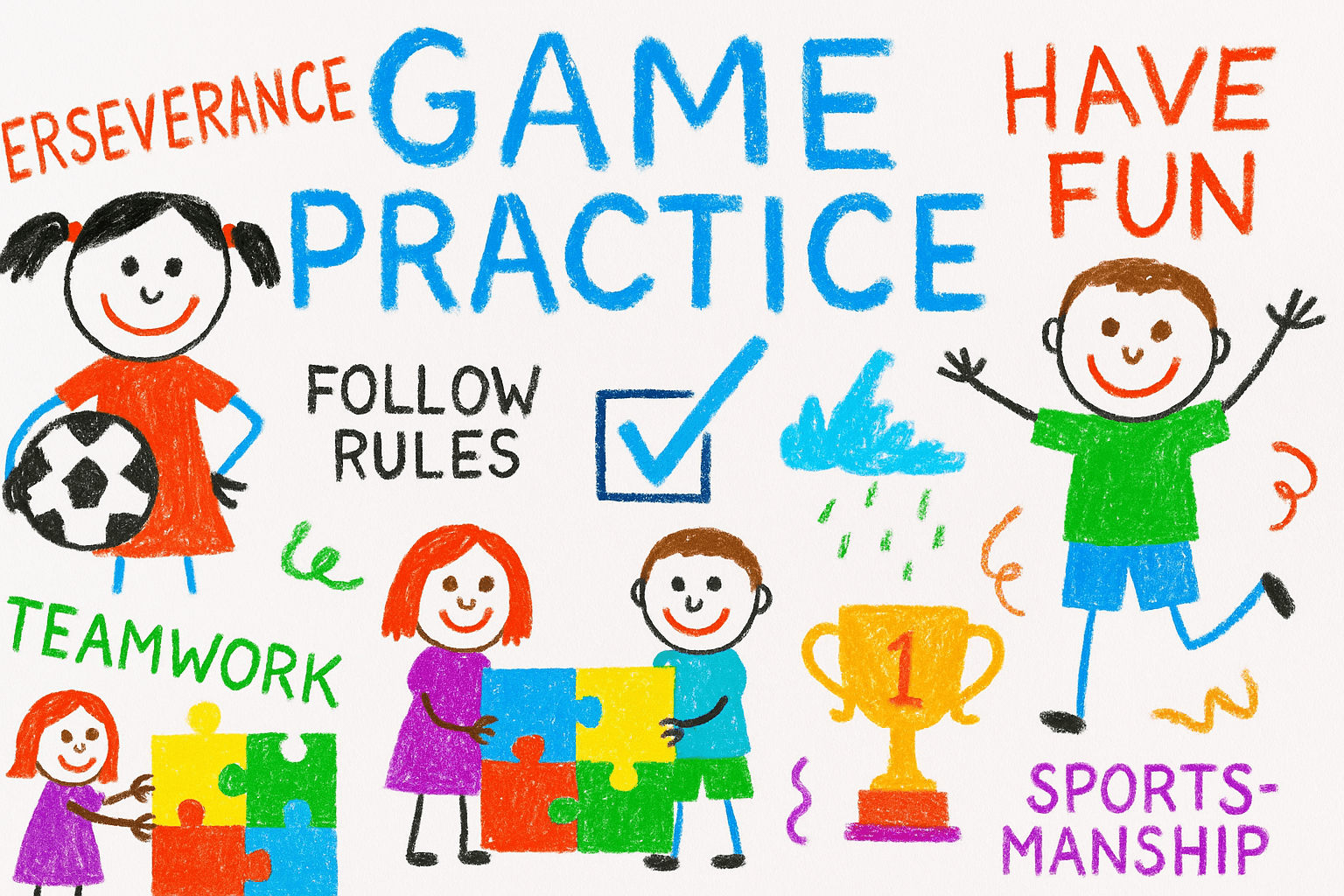
    Children’s crayon drawing with the words “GAME PRACTICE,” showing kids with a soccer ball, children building a puzzle for teamwork, a trophy, and labels like “PERSEVERANCE,” “FOLLOW RULES,” “SPORTSMANSHIP,” “TEAMWORK,” and “HAVE FUN.”

    Weekly Overview

    Theme

    How can I get better at playing games?

    Focus Areas

    • Practice
    • Perseverance
    • Sportsmanship
    • Growth mindset

    Key Vocabulary

    practiceimproveperseveretryeffortpatienceteamworksportsmanshipskillsgrowth

    Fostering a Growth Mindset

    Use game play as an opportunity to develop a growth mindset in your students. When children struggle with a game, encourage them to use phrases like 'I can't do this yet' instead of 'I can't do this.' Celebrate effort and improvement rather than just winning. Share examples of how practice helps us improve in all areas of life, not just games.

    Daily Plans

    Monday: Practice Makes Progress

    Daily schedule and activities

    Morning Activity

    Morning Circle: Discuss how practice helps us get better at games

    Literacy Focus

    Read 'Froggy Plays T-ball' by Jonathan London

    Math Focus

    Graph results of skill practice (e.g., bean bag tosses) over multiple attempts

    Afternoon Activity

    Practice simple game skills and track improvement

    Materials Needed

    • Froggy Plays T-ball book
    • Bean bags
    • Targets
    • Graphing materials
    • Skill practice stations

    Assessment Notes

    Observe students' understanding of how practice leads to improvement and their persistence when practicing skills.

    Featured Activities

    Skill Challenge Stations

    Students rotate through stations practicing different game skills (throwing, catching, balancing, etc.), tracking their progress over multiple attempts.

    Duration

    40 minutes

    Materials

    • Station signs
    • Various game equipment
    • Recording sheets
    • Stickers for achievements

    Learning Areas

    Physical Skills
    Perseverance
    Self-Assessment

    Good Sport/Poor Sport Sorting

    Students sort picture cards showing examples of good and poor sportsmanship, discussing why each behavior belongs in that category.

    Duration

    25 minutes

    Materials

    • Behavior picture cards
    • Sorting mats
    • Discussion prompts
    • Role-play props

    Learning Areas

    Social Skills
    Critical Thinking
    Character Education

    Growth Mindset Game Challenges

    Students attempt increasingly difficult game challenges, using growth mindset language and strategies when faced with obstacles.

    Duration

    30 minutes

    Materials

    • Challenge cards
    • Game equipment
    • Growth mindset phrase cards
    • Timer

    Learning Areas

    Resilience
    Problem Solving
    Positive Self-Talk

    Game Skills Show and Tell

    Students demonstrate a game skill they've improved at, explaining how they practiced and what strategies helped them get better.

    Duration

    35 minutes

    Materials

    • Various game equipment
    • Presentation schedule
    • Audience feedback forms
    • Certificates

    Learning Areas

    Communication
    Self-Reflection
    Confidence Building

    Celebrating All Types of Improvement

    When celebrating improvement in game skills, be sure to recognize various types of growth beyond just physical skills. Acknowledge improvements in following rules, showing good sportsmanship, helping others, persevering through challenges, and working as a team. This helps children understand that becoming better at games involves many different skills and attitudes.

    Resources

    Books

    • "Froggy Plays T-ball" by Jonathan London
    • "The Little Engine That Could" by Watty Piper
    • "Strictly No Elephants" by Lisa Mantchev
    • "Franklin Plays the Game" by Paulette Bourgeois
    • "Perseverance Makes Me Stronger" by Elizabeth Cole

    Printables

    • Skill practice recording sheets
    • Growth mindset posters and cards
    • Good sportsmanship scenario cards
    • Game skills progress tracking forms
    • Achievement certificates

    Home Connection

    Send home a family activity sheet encouraging families to practice a game skill together and celebrate improvement. Include a simple chart for tracking progress and reflection questions about perseverance and growth.

    Previous Week: What do I need to play games?Back to Games Unit Overview