OECS Logo
Powered by AI
HomeCurriculumCommunitiesResourcesHelp
  1. Home
  2. 📚Curriculum
  3. 🎨Kindergarten
  4. Plants-and-animals
  5. Week-3

OECS Curriculum

The Organisation of Eastern Caribbean States (OECS) Curriculum Framework is designed to provide a comprehensive, student-centered approach to education across member states.

Quick Links

  • Curriculum Overview
  • Teacher Resources
  • Lesson Planner
  • About OECS
  • Privacy Policy
  • Terms of Service

Contact

OECS Commission

Morne Fortune

P.O. Box 179

Castries, Saint Lucia

Email: pearl@oecs.int

Tel: +1 758-455-6327

Subscribe to Newsletter

Stay updated with the latest curriculum resources and teaching strategies.

© 2026 Organisation of Eastern Caribbean States. All rights reserved.

    Week 3: Habitats

    Weekly Focus

    Children learn about different habitats and why specific plants and animals live in certain places, exploring how plants and animals depend on each other and their environment.
    Week Plan PDF All Materials Plan Your Lesson Previous WeekNext Week

    Week at a Glance

    • Understand why plants and animals live where they do
    • Explore different types of habitats
    • Create models of habitats
    • Recognize how plants and animals depend on each other
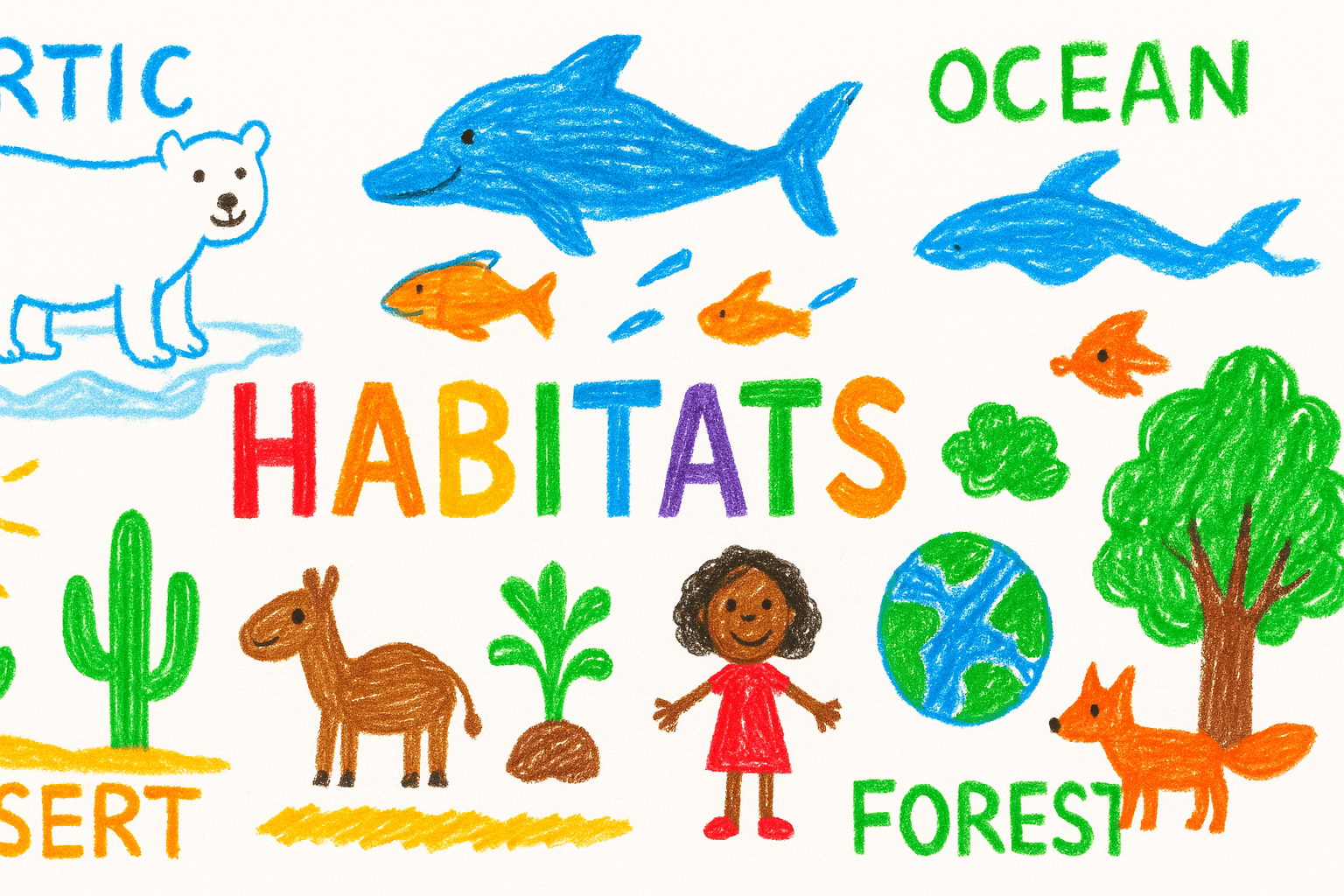
    Children’s crayon drawing with the word “HABITATS,” showing Arctic with a polar bear, Ocean with dolphins and fish, Desert with cactus and camel, and Forest with trees, fox, and a child, illustrating how plants and animals live in different environments.

    Weekly Overview

    Theme

    Habitats

    Focus Areas

    • Habitat types
    • Habitat needs
    • Interdependence
    • Habitat models

    Key Vocabulary

    habitatforestoceandesertpondgrasslanddependenvironmentadaptecosystem

    Creating Habitat Models

    When creating habitat models with young children, provide a variety of natural and recycled materials. Encourage children to think about what the plants and animals in their habitat need to survive. Take photos of the completed models and create a class book where children can dictate or write about their habitats. This extends the learning and creates a lasting record of their understanding.

    Daily Plans

    Monday: What is a Habitat?

    Daily schedule and activities

    Morning Activity

    Morning Circle: Introduce the concept of habitats using the poem 'At My Home'

    Literacy Focus

    Discuss where humans live and why

    Math Focus

    Count and sort pictures of different habitats

    Afternoon Activity

    Play 'Skip to My Lou' with habitat-themed verses

    Materials Needed

    • Habitat poem chart
    • Pictures of different habitats
    • Sorting mats
    • Music for game
    • Habitat photographs

    Assessment Notes

    Observe students' prior knowledge about habitats and their understanding of why living things live in specific places.

    Featured Activities

    Habitat Matching Game

    Students match animal cards to their correct habitat mats, discussing why each animal belongs in that habitat.

    Duration

    30 minutes

    Materials

    • Habitat mats
    • Animal cards
    • Sorting trays
    • Habitat fact cards

    Learning Areas

    Science
    Critical Thinking
    Vocabulary Development

    Habitat Dioramas

    Students create shoebox dioramas of different habitats, including appropriate plants and animals made from various materials.

    Duration

    60 minutes (may be spread over multiple sessions)

    Materials

    • Shoeboxes
    • Construction paper
    • Natural materials
    • Clay
    • Small animal figures

    Learning Areas

    Science
    Art
    Fine Motor Skills

    Interdependence Diagrams

    Students create simple diagrams showing connections between plants and animals in a habitat using pictures and arrows.

    Duration

    35 minutes

    Materials

    • Plant and animal pictures
    • Arrow cards
    • Chart paper
    • Glue
    • Markers

    Learning Areas

    Science
    Systems Thinking
    Visual Representation

    Habitat Dramatic Play

    Students role-play being different animals in their habitats, acting out how they find food, water, and shelter.

    Duration

    40 minutes

    Materials

    • Animal masks/headbands
    • Habitat backdrop
    • Props for food/water/shelter
    • Music

    Learning Areas

    Dramatic Play
    Science
    Physical Development

    Connecting to Local Habitats

    Make learning about habitats relevant by focusing on local environments that children may have experienced. Take a nature walk around the school to identify mini-habitats like a tree, a flower bed, or even a puddle after rain. Help children observe the plants and small animals that live in these spaces and discuss how these living things' needs are met in these habitats.

    Resources

    Books

    • "Who Lives Here?" by Nicola Davies
    • "A House Is a House for Me" by Mary Ann Hoberman
    • "I Can't Live Here" by Pamela Hickman
    • "Animal Homes" by Jennifer Boothroyd
    • "The Great Kapok Tree" by Lynne Cherry

    Printables

    • Habitat sorting cards
    • Animal-habitat matching worksheets
    • Habitat characteristics charts
    • Interdependence diagram templates
    • Habitat model planning sheets

    Home Connection

    Send home a family activity sheet that encourages parents/caregivers to explore different habitats in their neighborhood with their child and discuss what plants and animals live there and why.

    Previous Week: Survival NeedsNext Week: Changing Environments